The NED is starting tomorrow. The programme is here and the opening session will be live-streamed here.
Senior Lecturer in Economics at the University of Limerick.
The NED is starting tomorrow. The programme is here and the opening session will be live-streamed here.
I broke the liveblog. Apologies for that, we’ll just get back to the regular thread structure.
One of the really interesting outcomes of the last election was the rejection by voters of the Fine Gael strap line: let’s keep the recovery going. As measured by GDP growth, Ireland was rebounding from its period of austerity very strongly, with the fastest GDP growth in Europe.
A household sector which had just received an income tax cut, child benefit increases, pension increases, social welfare increases, public sector pay increases (or restorations, whatever), threw the main party’s ‘recovery’ line back in its face at the doorsteps–what recovery, they asked. No recovery here.
This was taken to mean that there was no recovery outside of Dublin. Dan O’Brien’s series of columns have dispelled that myth. There is a recovery in rural Ireland, it’s just not happening as quickly as in the capital, where employment levels are now 96% of their 2008 peak. In the Mid-West employment levels are at 88% of their peak.

Then a long and rambling discussion on the corporate tax element of Ireland’s apparent rebound took place, largely on twitter. The volatility of the corporate tax take in Ireland is exceptional.
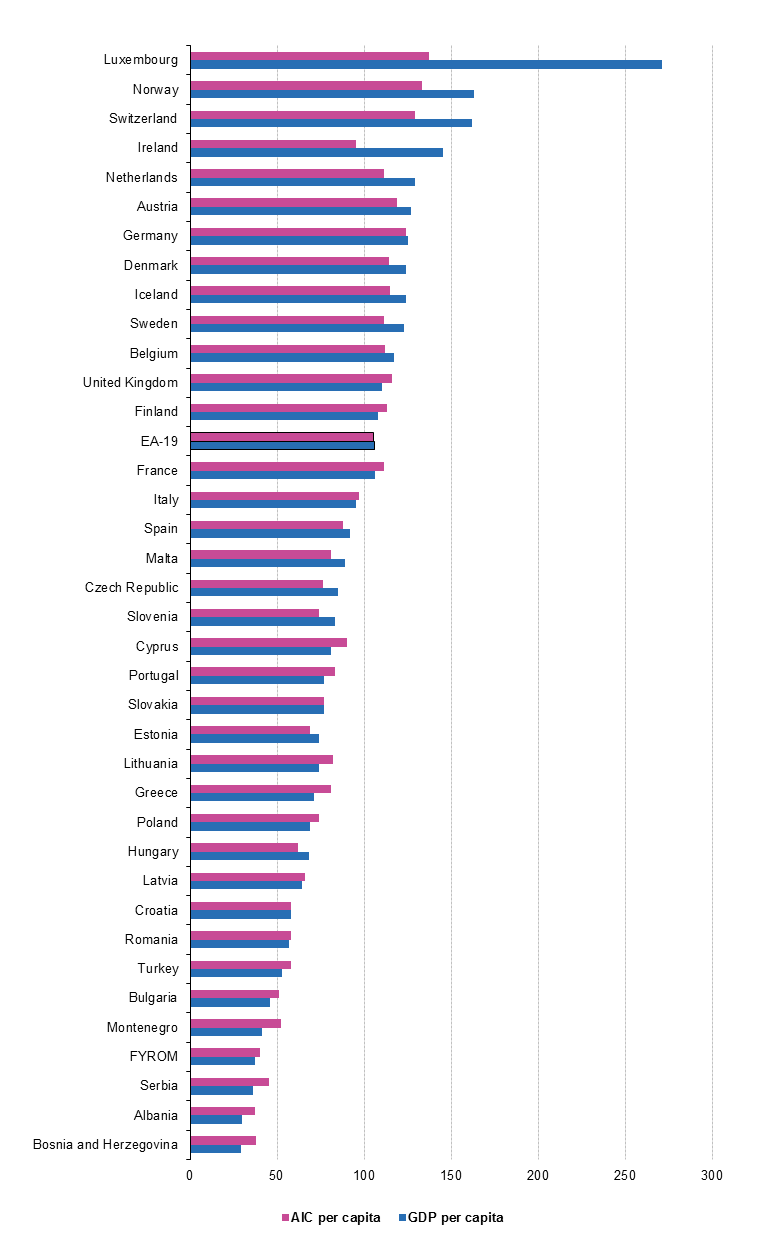
Yet another strand of the argument is given by thinking about Ireland in relation to Europe. Philip Connolly of the times in Ireland showed me these data of GDP per capita in purchasing power parity adjusted euros compare it with an actual income for consumption measure. The graph below is from Eurostat and shows the difference in the two measures with Ireland and Luxemburg showing a very large difference between these two measures of household welfare. Using the AIC measure, Irish households are closer to Italian than Danish levels of welfare.

This may give a clue as to why we see such large differences between official rhetoric and the popular reaction to that rhetoric.
Is here (.pdf). A few days late to this, so apologies, but just one thought:
Think how far our budgetary institutions have evolved. From Charlie McCreevy getting up on Budget Day in the early 2000s and announcing measures his own cabinet hadn’t heard of, to today’s fiscal council reports, Spring Statements, National Economic Dialogues, to the design of new structures like the Budget Oversight Committee, reviews of the process of national budgeting (.pdf), a Parliamentary Budget Office to cost the figures independently, and an agreed spending envelope by the public, a lot has changed in 15 years.
Despite the annoyance it generated during the election, the ‘fiscal space’ is a well recognized academic idea dating back to the 1990s, and the fact that the entire debate took place using broad parameters everyone serious agreed upon is a very good thing. We actually had a debate in Ireland, messy and all as it was, on whether to spend more on services, or give back more in tax cuts. Thus informed, the public chose the former in large numbers. They want a recovery in services.
Well, the twitterbots, at any rate. If you’re on twitter, follow the IrishEconomyBot account for links to all of our new posts.
If you like RSS, our feeds are here.